
We're Anna and Tetiana, a mother and daughter who host fourteen homes on Galveston Island, and this is the question that arrives in our inbox more than any other: a guest sees a photo of the Gulf here and asks, politely, whether the beach is dirty. It isn't. But the honest answer takes more than one line, because two separate things are going on - the colour of the water, which is a year-round fact of geography, and the seaweed, which has a season you can plan around.
Why is the water brown in Galveston?
Silt. Galveston sits at the receiving end of a conveyor belt of river mud. Visit Galveston's explainer on the island's water colour names six rivers feeding sediment into this part of the Gulf - the Mississippi and Atchafalaya out of Louisiana, the Sabine on the state line, and the Trinity, Brazos and Colorado in Texas. Oceanographer Piers Chapman puts roughly 70 percent of the westward-moving sediment on the Mississippi alone, even though it is the furthest away of the lot.
The second half of it is wind. The sea floor here is shallow and gently sloping, so a steady onshore breeze lifts sediment off the bottom and holds it in the water column. Drop the wind for a few days and the same silt sinks, and the water goes green, then blue-green, then occasionally a blue that makes the local news. Colour here is a weather report, not a verdict on the beach.
Is the brown water dirty or unsafe to swim in?
Colour and water quality are measured separately, and you can check the real one yourself. Texas Beach Watch, run by the Texas General Land Office with EPA funding, samples the water weekly for Enterococcus bacteria - the indicator for sewage and storm-water runoff - and the GLO works with local government to post an advisory when levels exceed the EPA standard. The monitoring is run out of a statewide network with more than 150 sites on the Texas coast, sampled weekly through the May-to-September season and every two weeks the rest of the year.
Two things worth knowing before you read a headline about it. An advisory is a warning, not a closure - Texas Beach Watch says plainly that you may still visit a beach under an advisory unless local authorities have closed it. And advisories follow rain and runoff, not the colour of the water. A brown day after a week of dry, calm weather can test cleaner than a green day two days after a storm.
When is the water in Galveston clearest?
Autumn, on the balance of probability. Two things line up in September and October: the spring runoff and the heaviest tropical rain are behind us, so the rivers are carrying less, and the coastal current flips to run south-to-north along the Texas coast, pushing saltier, bluer offshore water in and holding the Louisiana freshwater plume back. Visit Galveston describes exactly that pattern in its water-colour piece. Add a few days of light wind on top and you get the clear water people photograph.
What nobody can give you is a guarantee for your dates. Clear water here is a run of calm weather, and calm weather is a forecast, not a season. The table below is the pattern, not a promise.
Water temperatures are hourly averages for 2022-2025 at NOAA station 8771341, Galveston Bay Entrance North Jetty - the gauge closest to open Gulf water. The seaweed window follows the Park Board's beach maintenance policy; the clarity pattern follows Visit Galveston.
| Month | Typical water look | Sargassum odds | Avg water temp |
|---|---|---|---|
| January | Brown to grey-green, cold and often choppy | Low | 56°F |
| February | Brown to grey-green | Low | 58°F |
| March | Brown - spring wind is the problem, not the rivers | Low, occasional early lines | 65°F |
| April | Brown, rising river flow | Rising - early landings happen | 73°F |
| May | Brown | Peak window opens | 80°F |
| June | Brown to brown-green, seaweed lines on the sand | Peak | 85°F |
| July | Brown-green, seaweed easing by late month | Peak, thinning at the end | 87°F |
| August | Brown-green, some clear days | Tapering off | 88°F |
| September | Best odds of green to blue-green start here | Low | 85°F |
| October | Clearest month on average | Low | 78°F |
| November | Green to blue-green, cooling, emptier beaches | Low | 69°F |
| December | Variable, cold, clear on calm days | Low | 60°F |
Note the temperature column before you write off the shoulder season. The Gulf here is still 85°F in September and 78°F in October - warmer than the Atlantic off the Carolinas in mid-summer - while the crowds and the rates have already dropped. That is the argument for autumn in one line, and we make it at more length in our guide to the best time to visit Galveston.
When is seaweed season in Galveston?
May through July, in the Park Board's own words. Its beach maintenance policy states that seaweed season fluctuates from year to year but that sargassum typically washes up on Galveston's beaches May through July. April can bring early lines, and August usually cleans up as the month goes on.
How heavy a given year gets is tracked by satellite. The University of South Florida's Optical Oceanography Lab publishes a monthly Sargassum Watch bulletin, and Texas A&M at Galveston runs the Sargassum Early Advisory System, which forecasts where drifting mats will land on the Texas coast over the next few days. If you want to know what your week looks like, those two beat any blog post, including this one.
For context on this year: 2026 was a heavy one. USF's bulletin for August 2026 reported that amounts had begun their normal seasonal decline but that every region except the eastern Atlantic still sat above the 75th percentile of the 2011-2025 record, and its outlook expects amounts to keep falling through the coming months, possibly into November. In plain terms, the worst of 2026 is behind us and autumn should be quiet on the seaweed front.
Does Galveston clean the seaweed off the beach?
Some of it, on some beaches, and less than most visitors assume - and the reason is legal, not lazy. Under Chapter 61 of the Texas Natural Resources Code, the duty to "clean and maintain" a public beach covers litter, debris and safety hazards. The Park Board's policy spells out what follows from that: sargassum removal is not part of that duty and is an optional service, and moving it at all requires a City of Galveston beachfront construction permit plus a US Army Corps of Engineers beach cleaning permit tied to specific mapped stretches of sand.
So the seaweed gets relocated rather than hauled away - pushed seaward of the dunes to break down where it belongs, because it traps sand and helps dunes build. Crews use surf rakes that lift weed and leave sand, they work the low-traffic hours from predawn through mid-morning, and they only start when the wrack on the beach passes a measured threshold on the Texas A&M at Galveston wrack scale. Litter, by contrast, is picked up daily across all 32 miles of island beach, excluding Galveston Island State Park and Jamaica Beach.
Beaches named in the Park Board's beach maintenance policy for sargassum relocation. Litter and debris removal is island-wide; seaweed relocation is not.
| Stretch of sand | Seaweed relocated? |
|---|---|
| R.A. Apffel Park (East Beach) | Yes - named in the policy |
| Stewart Beach | Yes - named in the policy |
| Seawall Urban Park (publicly owned sections) | Yes - named in the policy |
| Dellanera RV Park | Yes - named in the policy |
| County Pocket Parks 1 and 2, West End | Yes - named in the policy |
| End of the Seawall to Dellanera RV Park | Yes - engineered beach with dedicated easements |
| Sand in front of a private house or subdivision | No - litter is collected island-wide, seaweed is left where it lands |
| Galveston Island State Park, Jamaica Beach | Outside Park Board beach maintenance entirely |
That last-but-one row is the one that surprises people, so we would rather say it before you book than after you arrive. If you stay in a beachfront house, the sand outside your deck is not on anyone's nightly rake list. In June that can mean a knee-high line of weed for a day or two until the tide takes it back. The raked sand is at the beach parks, a few minutes away - which is where we send guests on the heaviest weeks.
 Our home: Grand Beach Retreat
How do we plan around it at our own homes?
- Book May to July anyway, but book a pool. Seaweed peaks in exactly the months families can travel. A home with pool access takes the pressure off the one variable nobody controls.
- Check the forecast, not the season. SEAS gives you a few days' notice on where mats will land, which is enough to move a beach day.
- Go early. Where crews do work, they finish by mid-morning. A raked beach park at 9 AM is a different place from the same park at 4 PM.
- Bring a small rake if seaweed bothers you. Clearing your own patch by hand is allowed, and it takes about five minutes.
- Don't judge the water by the first hour. Colour here changes with the wind inside a single day, and the outgoing tide often pulls the wrack line off with it.
We could photograph our beaches on the three bluest days of October and never mention June. Guests who arrive expecting the Caribbean leave a two-star review about accuracy. Guests who arrive knowing what the upper Texas coast looks like spend the week in the water.
Three ways to handle a brown-water, seaweed-season week
Book direct with us and save up to 15% vs Airbnb - 5-star Superhost homes, daughter & her mom run.




Sunrise on the Beach
Sunrise on the Beach is a 5-bedroom, 3-bath beachfront vacation rental in Galveston, Texas that sleeps up to 17, in the...

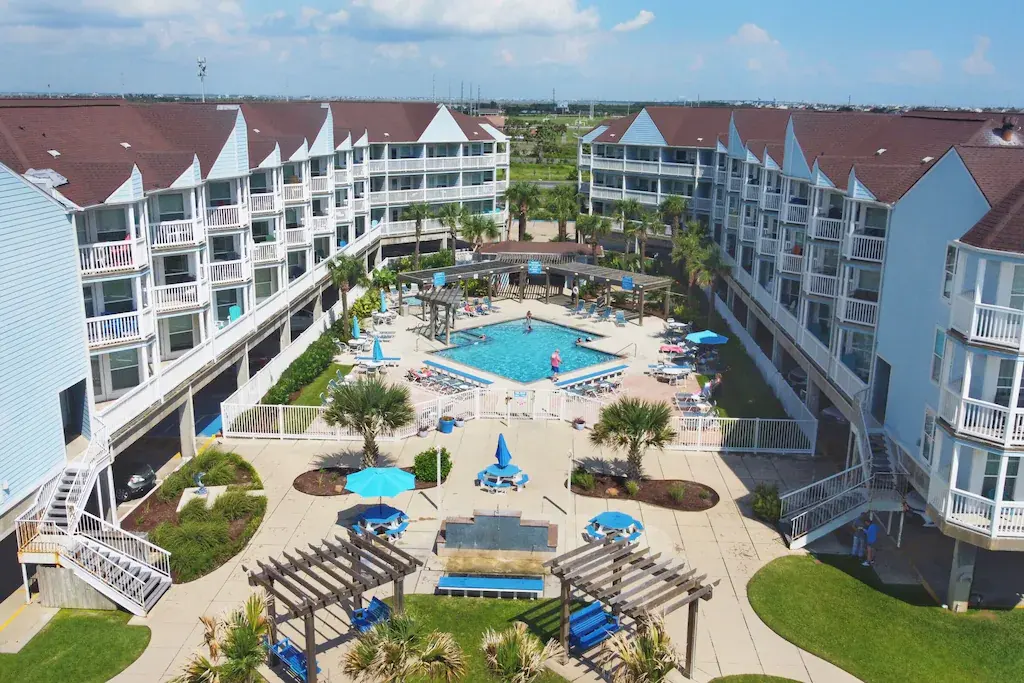
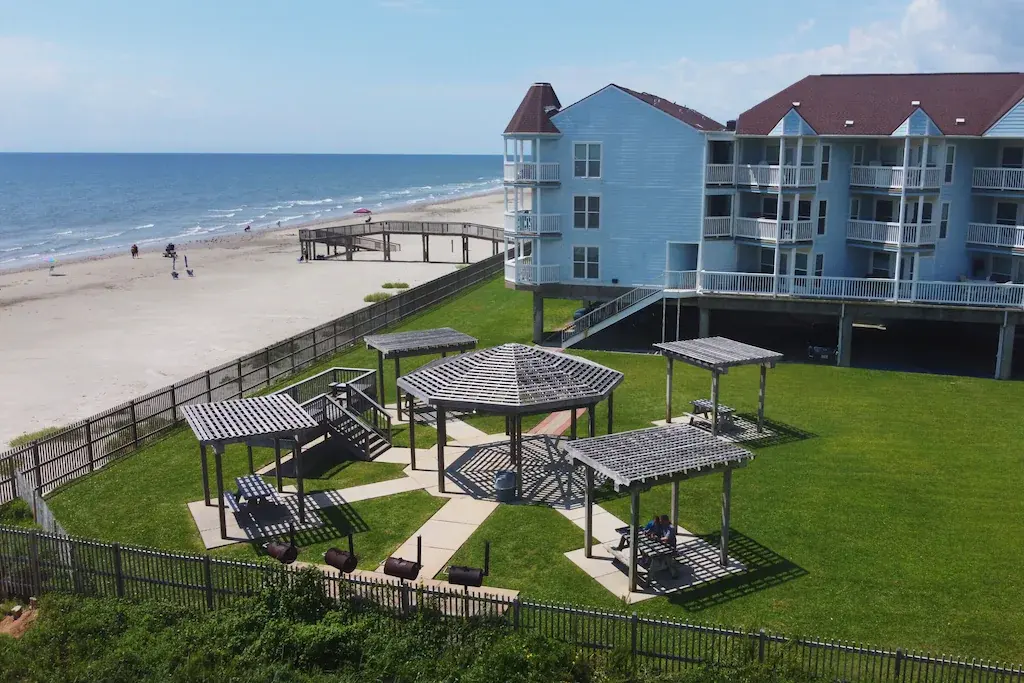
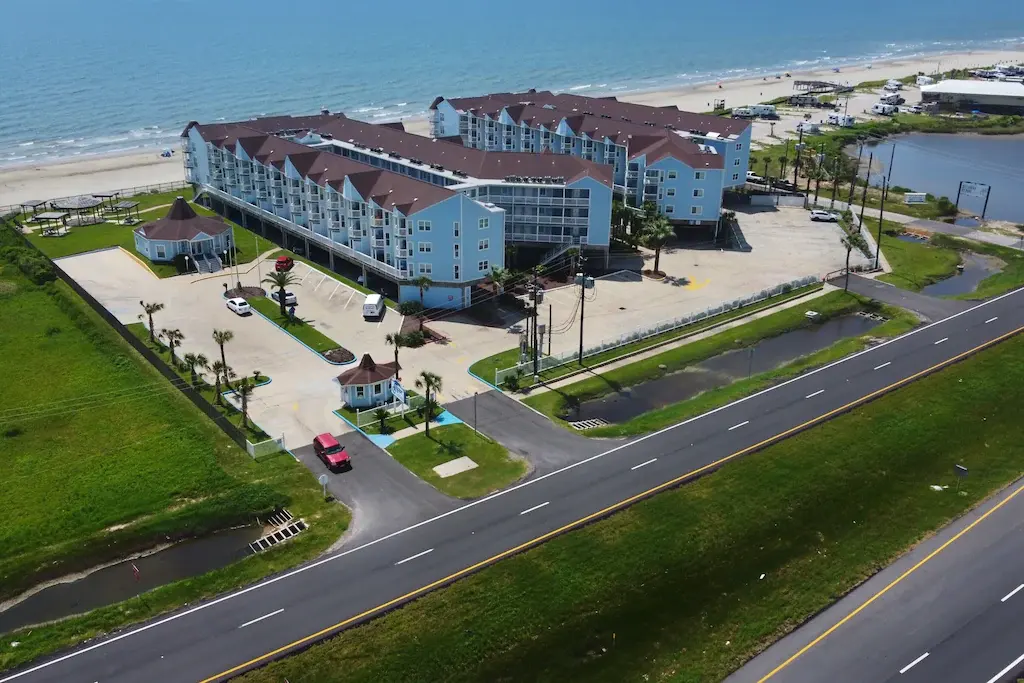
Seascape Condo 2208
Seascape Condo 2208 is a 1-bedroom, 1-bath beachfront condo in Galveston, Texas that sleeps 4, in the Seascape Resort...
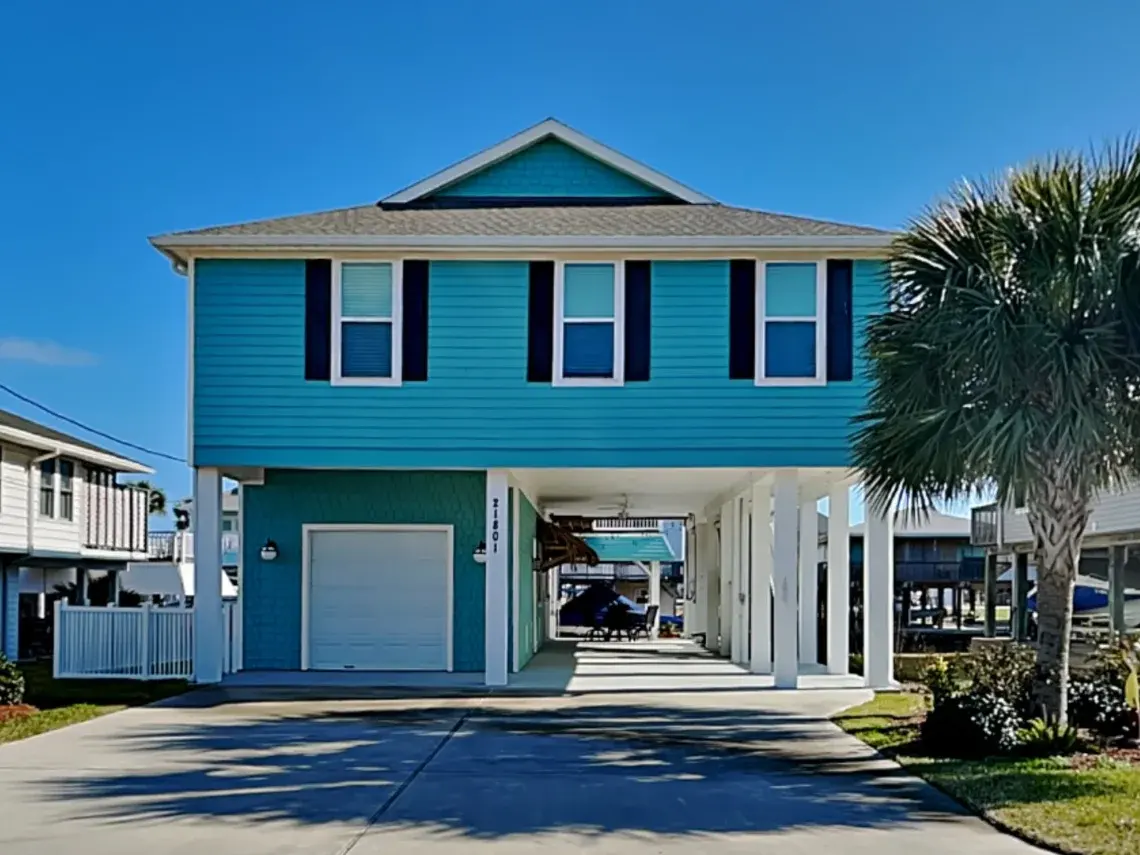



Tiki Retreat
Tiki Retreat is a 3-bedroom, 2.5-bath canal-front vacation home in Galveston, Texas, sleeping up to 10 guests in the...
When Galveston is not the right beach for you
- You want turquoise water in the photos. Port Aransas and South Padre sit further from the river plumes and run clearer more often, and the Florida panhandle is a different planet. If clear water is the whole point of the trip, book one of those instead - we would rather tell you now.
- You are coming in June for a single beach day. That is the middle of the sargassum window, and one day gives you no room to move.
- You expect a raked beach outside a private house. It is not on the Park Board's list, and no host on this island can put it there.
- Cold water is a deal-breaker and you're travelling in winter. The Gulf averages the mid-to-high 50s from December through February. It's beautiful and empty, and almost nobody swims.
- You need certainty. We can tell you the pattern. We cannot tell you what the wind will do in five months.
Working out where on the island to land? Our rundown of the best beaches in Galveston compares the raked beach parks against the quiet West End sand, and the best time to visit puts the water temperatures next to the crowds and the rates. If you're travelling between June and November, read the hurricane season guide too - the same tropical rain that muddies the water is the reason we wrote it. When you're ready to pick a home, start with our Galveston beachfront rentals or browse everything we host.
Our Galveston homes for this trip
Hosted by us, Anna & Tetiana. Book direct and save up to 15% vs booking sites.
Sunrise on the Beach
Sunrise on the Beach is a 5-bedroom, 3-bath beachfront vacation rental in Galveston,...
5 BR Sleeps 17Seascape Condo 2208
Seascape Condo 2208 is a 1-bedroom, 1-bath beachfront condo in Galveston, Texas that...
1 BR Sleeps 4Tiki Retreat
Tiki Retreat is a 3-bedroom, 2.5-bath canal-front vacation home in Galveston, Texas,...
3 BR Sleeps 10
Frequently asked questions
Why is the water brown in Galveston?+
Suspended river sediment, not pollution. Six rivers feed silt into this part of the Gulf - the Mississippi and Atchafalaya from Louisiana, the Sabine, and the Trinity, Brazos and Colorado in Texas - and roughly 70 percent of the westward-moving sediment comes from the Mississippi. The sea floor off Galveston is shallow, so onshore wind keeps that silt suspended. When the wind drops for a few days, the sediment settles and the water turns green or blue.
Is it safe to swim in Galveston's brown water?+
Colour is not a measure of water quality. Texas Beach Watch, run by the Texas General Land Office with EPA funding, samples Galveston beaches weekly for Enterococcus bacteria and posts an advisory when levels exceed the EPA standard. Check the current status at texasbeachwatch.com before you swim. An advisory is a warning rather than a closure, and it tracks rainfall and runoff rather than how brown the water looks that day.
When is Galveston's water clearest?+
September and October, on average. By early autumn the spring runoff and the heaviest tropical rain are past, so the rivers carry less sediment, and the coastal current shifts to run south-to-north, bringing saltier offshore water toward the beach. Add a few days of light wind and the water goes green to blue-green. It is a pattern rather than a guarantee - clear water here is a run of calm weather, not a fixed season.
When is seaweed season in Galveston?+
Sargassum typically washes up on Galveston's beaches from May through July, according to the Galveston Park Board's beach maintenance policy. April can bring early landings and August usually thins out as the month goes on. The Texas A&M at Galveston Sargassum Early Advisory System forecasts where mats will land on the Texas coast a few days ahead, which is more useful than any seasonal average for a specific trip.
Does Galveston rake the seaweed off the beach?+
Only on specific beaches, and it is moved rather than removed. Under Chapter 61 of the Texas Natural Resources Code, sargassum relocation is not part of the legal duty to clean and maintain a public beach, and it requires a City of Galveston permit plus a US Army Corps of Engineers permit tied to mapped stretches of sand. The Park Board's policy names East Beach, Stewart Beach, the publicly owned Seawall Urban Park, Dellanera RV Park, County Pocket Parks 1 and 2, and the engineered beach from the end of the Seawall to Dellanera. Sand in front of private homes is not on that list.
Was 2026 a bad sargassum year in Galveston?+
It was a heavy one. The University of South Florida's Sargassum Watch bulletin for August 2026 reported that amounts had started their normal seasonal decline but that every region except the eastern Atlantic still sat above the 75th percentile of the 2011-2025 record. The same bulletin expects amounts to keep decreasing in the following months, possibly into November, so the autumn 2026 beaches should be well clear of the summer's peak.
How warm is the water in Galveston by month?+
Based on hourly readings from 2022 to 2025 at NOAA station 8771341 at the Galveston Bay Entrance North Jetty, monthly averages run about 56°F in January, 58°F in February, 65°F in March, 73°F in April, 80°F in May, 85°F in June, 87°F in July, 88°F in August, 85°F in September, 78°F in October, 69°F in November and 60°F in December. September and October are the sweet spot: still warm enough to swim, with the summer crowds gone.
Make Galveston home for a few days
Book one of our 5-star Superhost homes direct and save up to 15% vs Airbnb.
Browse our homes