
We get this question every spring from guests who are booking for summer or fall: "Should I be worried about hurricanes in Galveston?" The honest answer is: a little awareness goes a long way, and panic is not necessary. Hurricane season runs from June 1 through November 30, peak activity is August through October, and most trips to Galveston during that window are completely uneventful. But Galveston is a barrier island on the Gulf of Mexico, and understanding how the island works - the evacuation system, the risk levels, the history - makes you a smarter traveler and a calmer one if a storm ever does head this way.
We've been managing homes here through multiple hurricane seasons. Here's everything you actually need to know.
When is hurricane season in Galveston?
The official Atlantic hurricane season runs June 1 through November 30, and it applies directly to Galveston and the Texas Gulf Coast. Within that window, risk is not evenly distributed. June and July produce storms but far less frequently than the peak months. August and September are historically the most active, with September being the single most dangerous month statistically. October still carries real risk. November is the tail end - storms are rare but not impossible.
Galveston hurricane season risk by month
| Month | Risk level | Notes |
|---|---|---|
| June | Low-moderate | Season opens, tropical systems possible but less common |
| July | Moderate | Activity picks up, Gulf waters warming |
| August | High | Peak season begins - primary threat window |
| September | High | Historically the most active month on the Gulf Coast |
| October | Moderate-high | Storms still form and track into the Gulf |
| November | Low | Season end - rare but not impossible |
| December–May | Minimal | Off-season |
How vulnerable is Galveston to storms?
Galveston is a barrier island - a long, narrow strip of sand sitting in the Gulf of Mexico. That geography makes it one of the most beautiful coastal destinations in Texas and one of the most exposed when a serious storm approaches. The main threat isn't wind. It's storm surge - the wall of seawater that a hurricane pushes onto land. A major storm can push 10-16 feet of water across the island.
This is not new information to Galveston. The Great Storm of 1900 - still the deadliest natural disaster in US history, with an estimated 6,000 to 12,000 deaths - hit the island before any protective infrastructure existed. The city's response was to build the Galveston Seawall: 17 feet tall, 16 feet wide at the base, and 10 miles long. It was completed in stages starting in 1902 and has since been tested by Hurricane Carla (1961), Hurricane Alicia (1983), and Hurricane Ike (2008). The Seawall has been designated a National Historic Civil Engineering Landmark.
The Seawall is a serious piece of infrastructure. But it doesn't make the island immune to surge from a major direct-hit storm. The island's leadership and emergency managers are clear about this, and that's why the evacuation system exists.
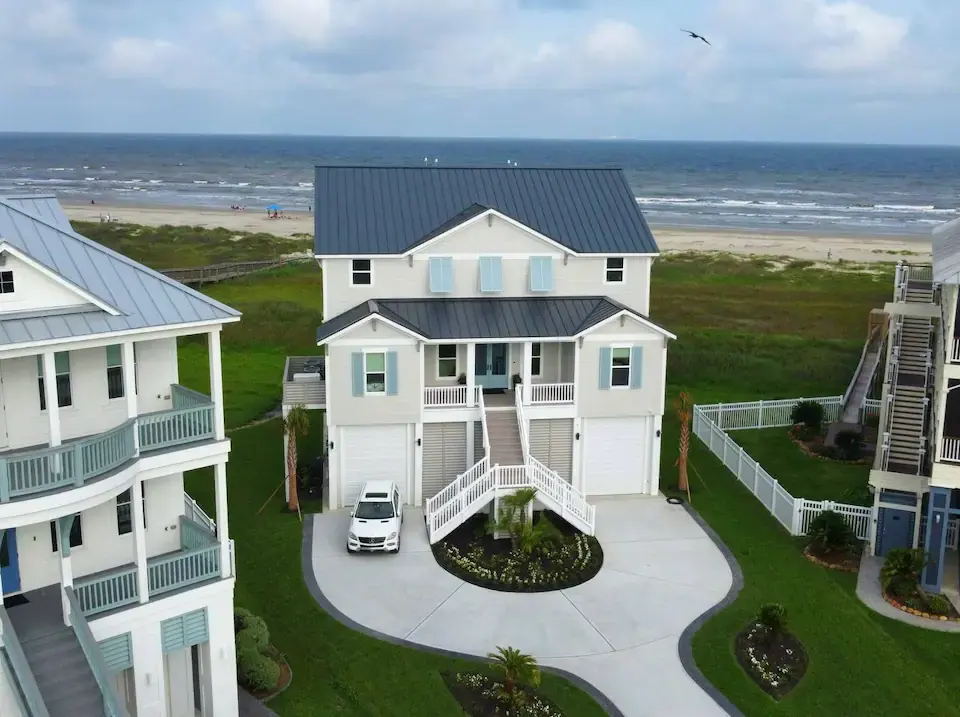 Our home: Fishwife
Evacuation zones - what they mean for you as a visitor
Galveston and surrounding areas use a zone-based evacuation system. All of Galveston Island is in Evacuation Zone Coastal - the highest-risk designation, the first zone ordered to evacuate when a serious storm threatens. This is not a bureaucratic technicality. It means that if the County Judge issues a mandatory evacuation order for Galveston Island, every person on the island - residents and guests alike - is expected to leave.
The authority to issue a mandatory evacuation rests with the Galveston County Judge. Orders go through local media, the city's emergency channels, and the county's communication systems. Evacuations follow a staggered sequence: Coastal zone first, then Zone A, then B, then C - so the most vulnerable people have clear roads first.
- Zone Coastal (all of Galveston Island): Evacuate first, as soon as the order comes.
- Zone A: High-risk areas, evacuate immediately after Coastal orders.
- Zone B: Moderate risk, follow after Zone A.
- Zone C: Lower-risk inland, last to evacuate in major storms.
- Emergency information line: Call 2-1-1 for evacuation zones, shelter locations, and special needs assistance.
- Road conditions: 1-800-452-9292
Practically speaking: if you're staying on the island and a storm is tracking toward Galveston, fill your gas tank early. Fuel disappears fast once evacuation orders get close to being issued. Know your route off the island before you need it. I-45 north toward Houston is the primary corridor. TxDOT manages contraflow lanes to speed evacuation traffic.
What happens to your booking if a storm hits
This is the question that matters most to guests, and our policy is clear: if the County Judge issues a mandatory evacuation order for Galveston Island during your stay, we will issue a full refund for any nights you cannot use. You don't have to fight us on this. You pack up, you leave safely, and we sort out the refund afterward.
Outside of a mandatory evacuation - if you choose to leave early because you're watching a storm track and you'd rather not deal with it - that falls under our standard cancellation policy. We strongly encourage guests traveling in August, September, or October to purchase travel insurance that covers weather events and trip interruption. As a small family business, we can't absorb the cost of every storm that passes within 300 miles of the island, but an evacuation order is different - that's a safety situation and we treat it as one.
Fishwife - the home that stays on when the grid goes dark
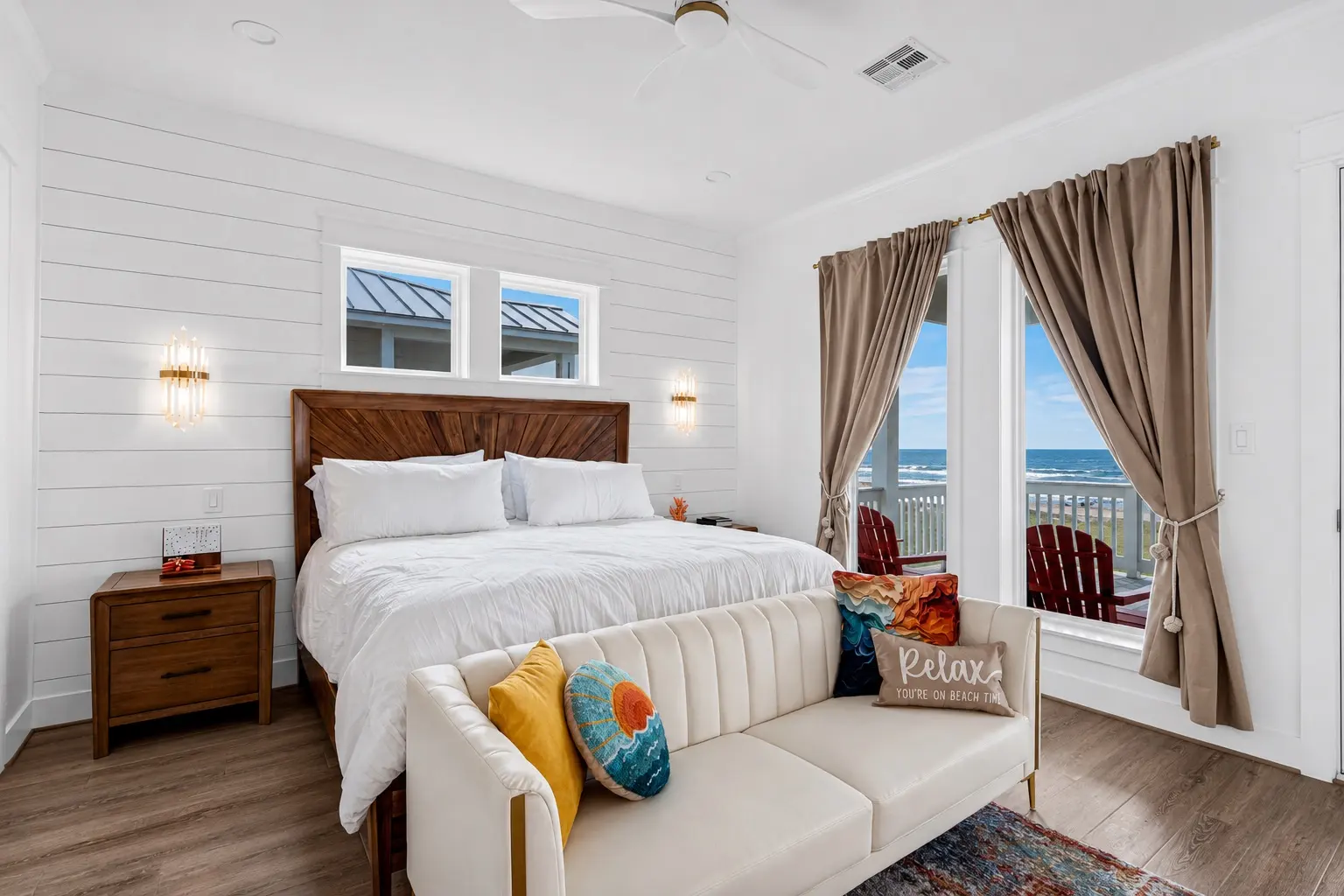
If storm resilience is a factor in where you book, [Fishwife](/properties/fishwife) is the standout in our collection. It's a 5-bedroom, 5-bathroom first-row beachfront home sleeping up to 14 people, built elevated on pilings in the gated Grand Beach community. What sets it apart from every other home on this block: an automatic whole-house generator.
When Galveston loses power - after a tropical storm passes through, after a strong thunderstorm, or in the aftermath of a near-miss event - Fishwife keeps going. Lights on. AC running. Refrigerator holding. Every outlet live. That's not a small thing when summer temperatures are in the 90s and the power company is working through a repair queue that stretches across the island.
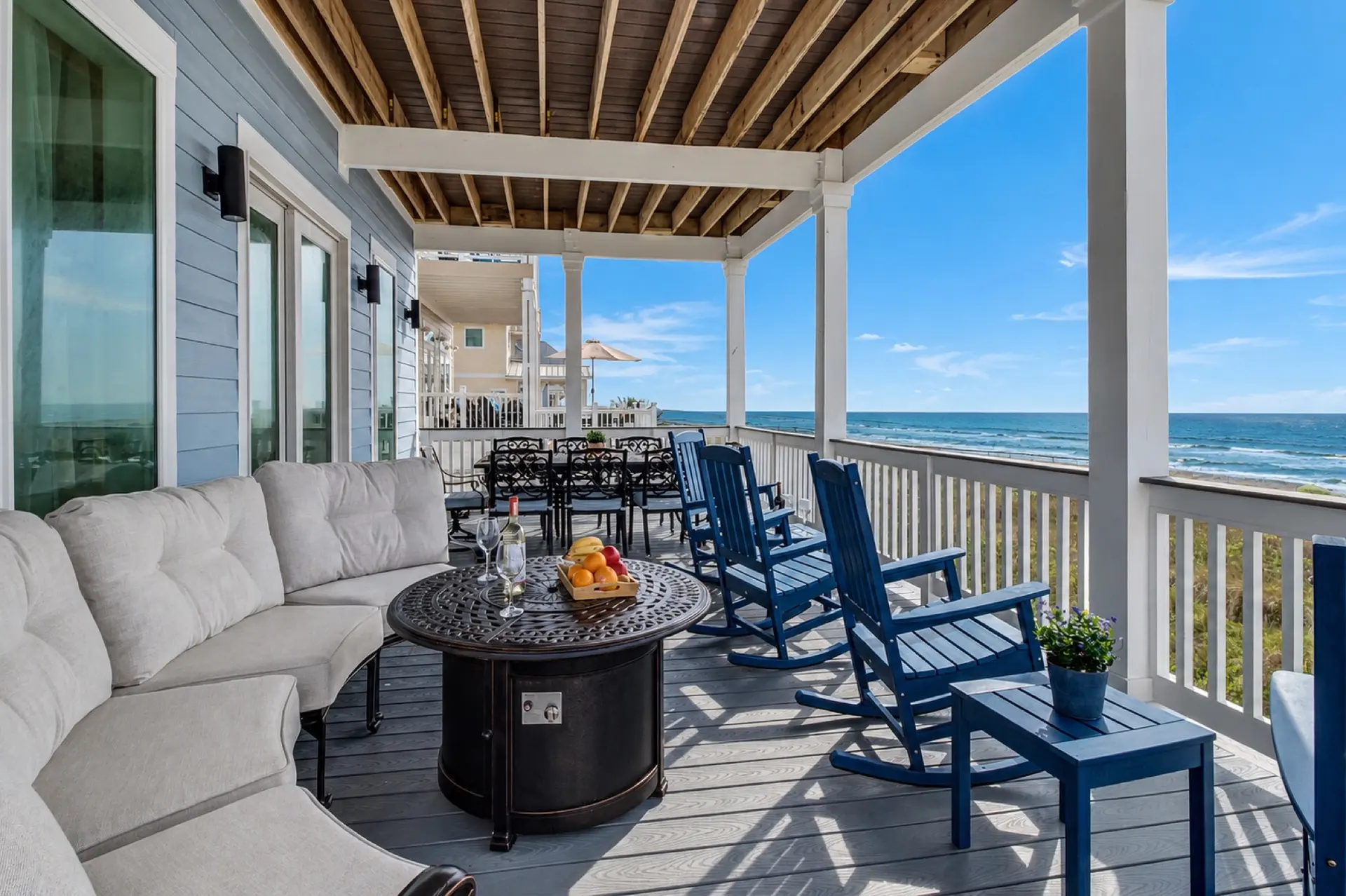
Fishwife also has a hydraulic elevator (no stair-climbing in the dark), security cameras covering all exterior areas, and is located in a gated community with private access. It's our most storm-resilient home, and also one of our most spectacular - panoramic Gulf views from every bedroom, 1,400 square feet of deck, and a ground-level bar and lounge area.
Our home: FishwifeOther homes near the beach - what storm season looks like from them
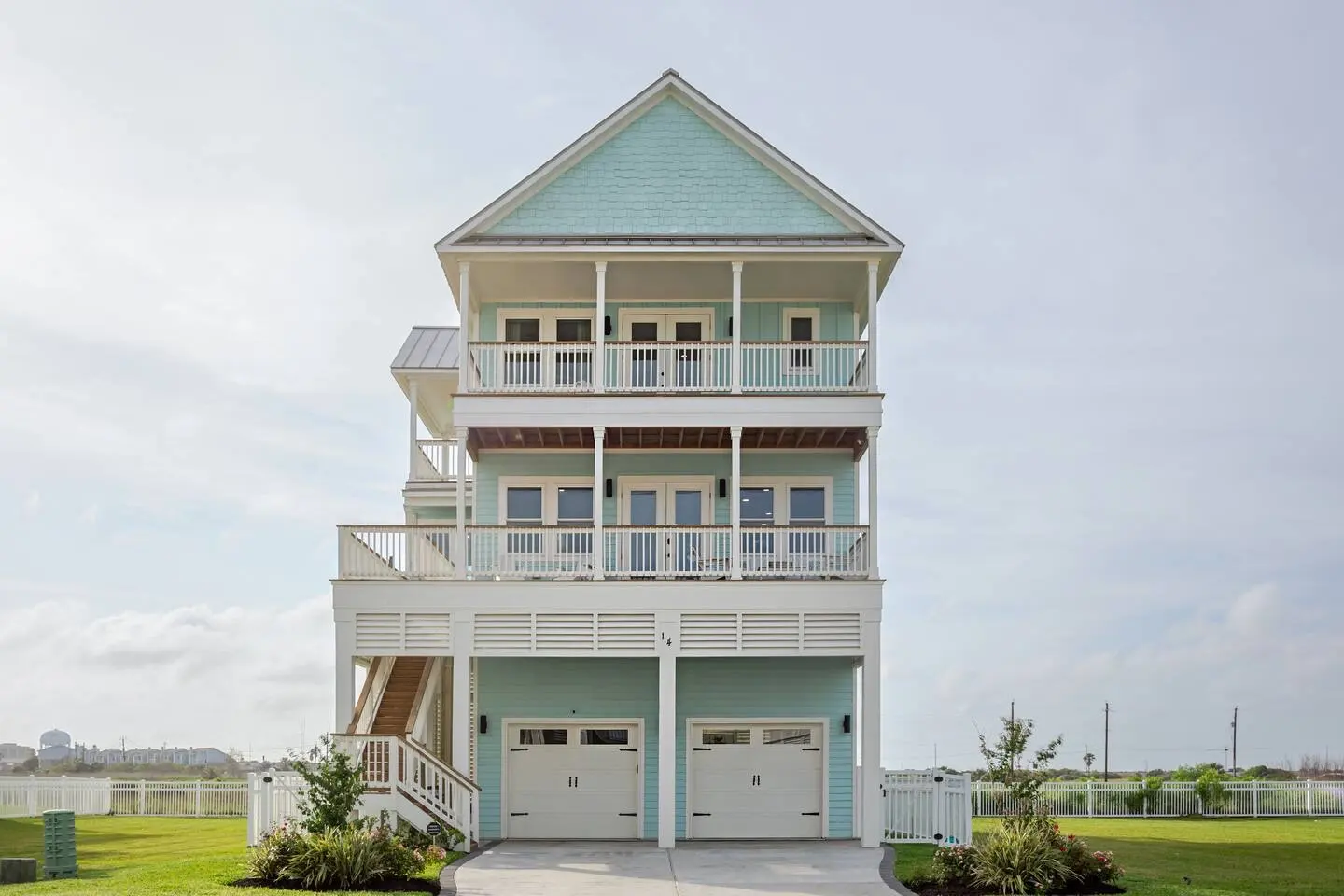
Most of our homes are in the Grand Beach gated community on the East End - elevated on pilings, as Galveston building codes require for beachfront homes. The elevation matters. Grand Beach Retreat, Sunrise on the Beach, and Alma de Mar are all first-row or one-row-back beachfront homes built to current codes with storm-appropriate construction.
None of the others have a generator like Fishwife does. But they're built for the environment, and the gated community gives them added security and reduced traffic if you're riding out a tropical rain event (not a mandatory evacuation - in that case, you leave). The community is also professionally managed, which means storm prep and post-storm response are organized rather than every-man-for-himself.
 Our home: Grand Beach Retreat
How to monitor storms during your trip
The good news is that hurricanes are not surprise events. Modern forecasting gives you 5 to 7 days of warning before a storm reaches the Gulf Coast. Here's how to stay informed:
- [National Hurricane Center (nhc.noaa.gov)](https://www.nhc.noaa.gov/) - the authoritative source. Check it once a day in peak season. If a system is in the Gulf or approaching from the Atlantic with a projected path toward Texas, it will be front and center.
- Galveston County emergency alerts - sign up for the county's emergency notification system before your trip so you get official alerts on your phone.
- Local news: KHOU 11, ABC13 - Houston/Galveston TV stations provide detailed storm coverage with Galveston-specific guidance.
- Text or call us. If something is tracking toward us, we're watching it too. We'll reach out to guests with dates in the window and keep you updated.
Travel insurance - the real answer to hurricane anxiety
If you're booking a trip to Galveston in August, September, or October and storm season makes you nervous, the right move isn't to avoid the island. It's to buy travel insurance that covers trip cancellation and trip interruption for weather events. A good policy lets you cancel for a named storm that threatens your destination without losing your money, and it covers the cost of cutting a trip short if an evacuation is ordered.
Read the fine print carefully: policies differ on when a named storm has to be announced before you bought the policy, what counts as a covered reason, and what the payout process looks like. The "cancel for any reason" upgrade is worth considering if you want maximum flexibility. Buy it when you book, not when a storm appears in the forecast - once a storm is named, it's typically too late to add weather coverage.
Our beachfront homes on Galveston Island
Book direct with us and save up to 15% vs Airbnb - 5-star Superhost homes, daughter & her mom run.
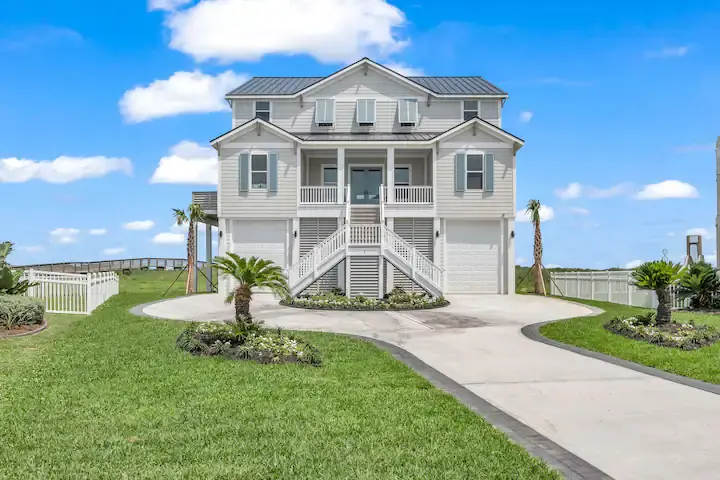
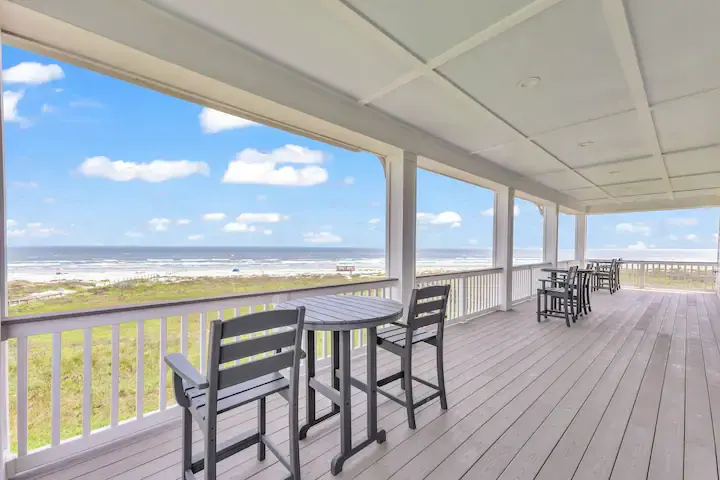
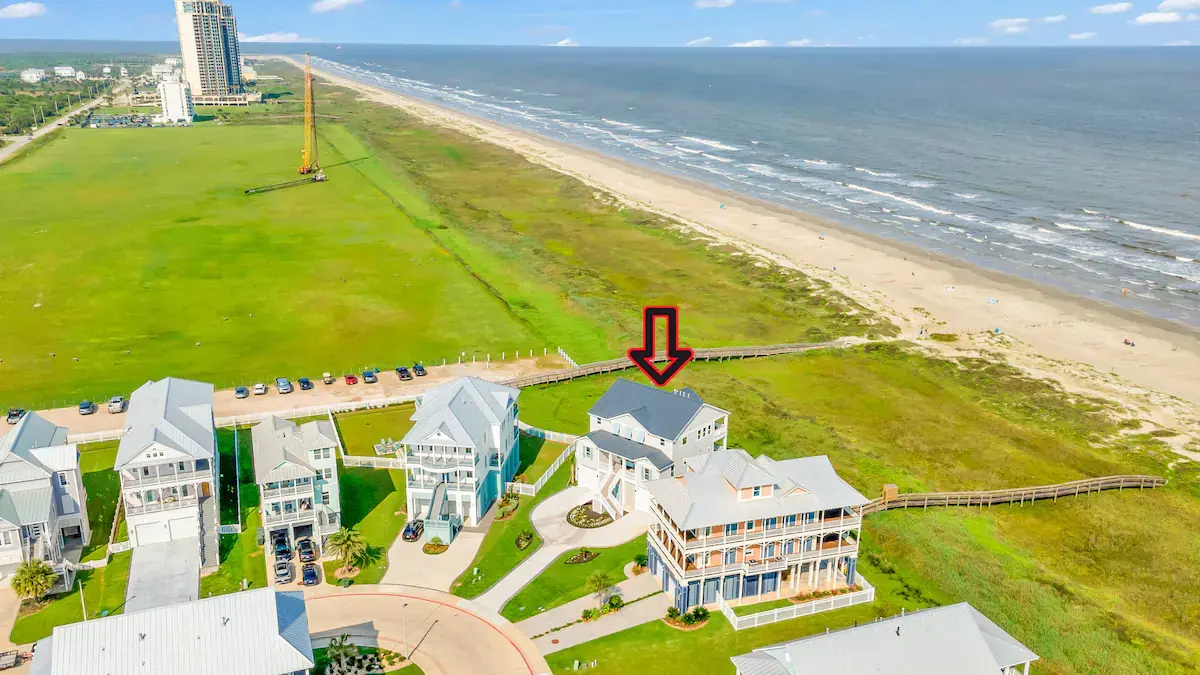
Fishwife
Fishwife is a 5-bedroom, 5-bath beachfront vacation rental in Galveston, Texas that sleeps 14, in the gated Grand Beach...

Grand Beach Retreat
Grand Beach Retreat is a 6-bedroom, 6.5-bath first-row beachfront vacation rental in Galveston, Texas that sleeps 16,...




Sunrise on the Beach
Sunrise on the Beach is a 5-bedroom, 3-bath beachfront vacation rental in Galveston, Texas that sleeps up to 17, in the...



Alma de Mar
Alma de Mar is a 4-bedroom, 3.5-bath beach house in Galveston, Texas that sleeps 12, in the gated Preserve at Grand...
Our Galveston homes for this trip
Hosted by us, Anna & Tetiana. Book direct and save up to 15% vs booking sites.
Fishwife
Fishwife is a 5-bedroom, 5-bath beachfront vacation rental in Galveston, Texas that...
5 BR Sleeps 14Grand Beach Retreat
Grand Beach Retreat is a 6-bedroom, 6.5-bath first-row beachfront vacation rental in...
6 BR Sleeps 16Sunrise on the Beach
Sunrise on the Beach is a 5-bedroom, 3-bath beachfront vacation rental in Galveston,...
5 BR Sleeps 17
Frequently asked questions
When is hurricane season in Galveston, Texas?+
Hurricane season in Galveston runs June 1 through November 30. The peak months are August and September, which are historically the most active on the Gulf Coast. October still carries meaningful risk. June and July see storms but less frequently.
Is it safe to visit Galveston during hurricane season?+
Yes - the vast majority of trips during hurricane season happen without any storm impact. Modern forecasting gives 5-7 days of warning before any storm reaches the Gulf Coast, so guests have plenty of time to make informed decisions. Purchasing travel insurance that covers weather events is strongly recommended for August through October trips.
What are the evacuation zones in Galveston?+
All of Galveston Island is designated Evacuation Zone Coastal - the highest-risk designation, ordered to evacuate first when a serious storm threatens. If the Galveston County Judge issues a mandatory evacuation order, all persons on the island are expected to leave. Emergency information: call 2-1-1. Road conditions: 1-800-452-9292.
What happens to my vacation rental booking if a hurricane forces an evacuation?+
If the Galveston County Judge issues a mandatory evacuation order during your stay, Kara's Vacation Rentals will issue a full refund for any unused nights. If you choose to leave early due to a storm threat without a mandatory evacuation order, the standard cancellation policy applies - which is why we recommend travel insurance for peak-season bookings.
Which Galveston vacation rentals have a generator?+
Fishwife, our 5-bedroom first-row beachfront home in the Grand Beach community, has an automatic whole-house generator. If the grid goes down during or after a storm, every light, the AC, the refrigerator, and all outlets remain on. It's the most storm-resilient home in our collection.
How far in advance does Galveston get warning before a hurricane?+
Modern weather forecasting typically provides 5-7 days of warning before a storm affects the Gulf Coast. Storm tracks become significantly more reliable within 48-72 hours. Experts recommend monitoring the National Hurricane Center (nhc.noaa.gov) daily during peak season but waiting for the forecast to clarify before making travel decisions.
Make Galveston home for a few days
Book one of our 5-star Superhost homes direct and save up to 15% vs Airbnb.
Browse our homes